
Roadtrip Recap
- Erlinde
- Jul 31, 2021
- 5 min read
Dear friends, family, colleagues (and anyone else who spies on our blog from time to time, only to get disappointed by our embarrassingly infrequent updates)
Here’s an as-brief-as-possible recap of our sabbatical trip, and some random thoughts that came to mind during the past months, summarized in 10 points:
1/ Sorrynotsorry for the minimal blog content. Besides going online to work and to Facetime close family & friends, we disconnected as much as we could. Turns out that life offline feels so much better!

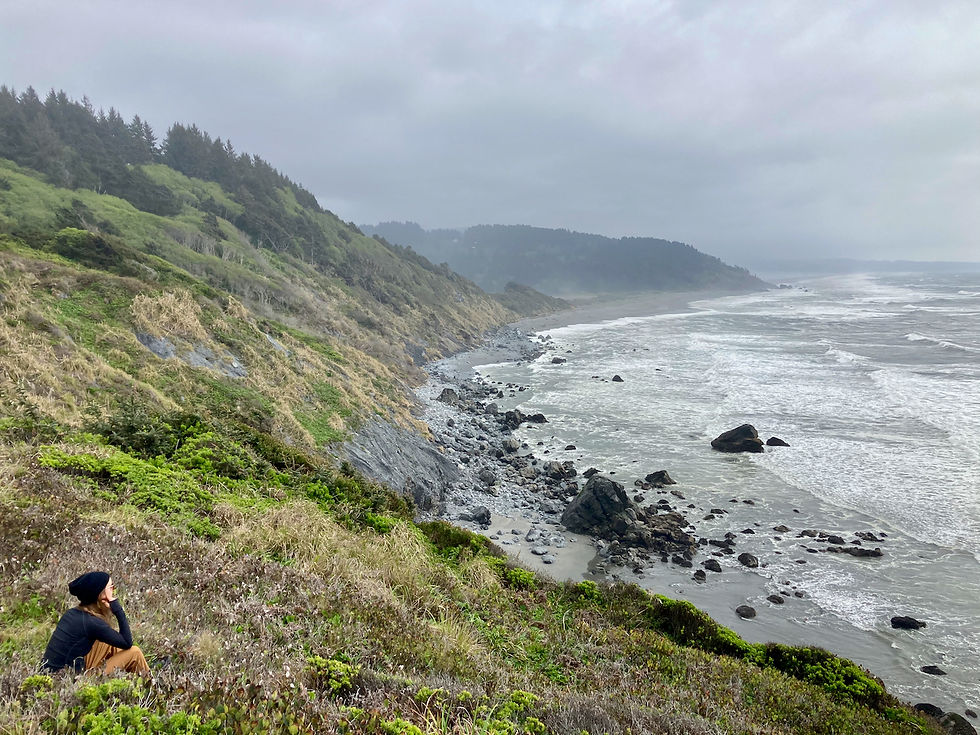
2/ FAQ #1 “What was the best destination on your trip?” We must say: Florida (surprisingly) and the Pacific Northwest (unsurprisingly). The link between them is lush, green, mossy, dense vegetation, an abundance of water, and pleasant air humidity. Other than those two regions, we really love and appreciate each state for its uniqueness. Americans are lucky with so much natural beauty (please don’t destroy it any further). We have seen dire effects of the climate crisis; we connected with people of opposing political views in rural areas; we hiked, SUPed, ran, and biked all over; and we felt an overwhelming love for nature.

3/ Aside from when we had COVID (in Utah), this entire trip was an absolute dream come true! It could have lasted years and we still wouldn’t be tired of it. Not to sound cheesy or oversell our experience, but we probably had the best time of our lives. Sure, the weather sometimes sucked, we had some mechanical issues with the RV, and some activities were impossible due to COVID, but it was still a life-changing experience that we are incredibly grateful for. Plus, traveling with our cat Chamise gave an extra layer of happiness to the trip!

4/ FAQ #2 “How did you not kill each other?”. Well, the love is pretty strong in this household. And mutual tolerance, compatibility, honest communication, and playfulness help a lot. Going from 4 years of long-distance marriage (Ghent – San Diego) to 6 months crammed in an RV together was surprisingly easy. We had a clearly and fairly divided task list, and always tried to keep a healthy balance on the road.

5/ Random thought: If Hawaii (tropical) and the Netherlands (flat and half underwater) had a baby, it’d be Florida. The Keys are like the Waddeneilanden, but with gators. Lots. Of. Gators.

6/ When visiting ecovillages/ILCs, we saw amazing examples of permaculture, along with the seemingly inevitable “permaclutter”. Organize your gardening stuff, hippies! ;-)

7/ On that note, it was an amazing honor to explore such a variety in sustainable living setups, from small (e.g., Zain’s urban food forest in Portland, Jodie’s in Pensacola, The Love Plan in Orlando) to medium (e.g., Rob Greenfield’s network in St Pete, Kailash in Portland) to large (e.g., Earthaven in rural North Carolina, Lost Valley in Oregon). We learned that ecovillages vary in their degree of interaction and connection with the “outside world” (some being more self-reliant “test sites'' of sustainable living, with their own internal trade-and alternative-currency-based micro economy; whereas others are in full symbiosis with the city they’re located in, and built within existing, already-developed structures rather than developing virgin land). We also learned the honest fact that ILCs are not immune to the evil that happens in society, but that the intentional motivations of inhabitants prevent and mitigate most harm and wrongdoing. Social governance and ownership structures vary from ILC to ILC. Most rely on some form of democratic decision making, supplemented with a good dose of nonviolent communication (NVC). A point of self-criticism that many interviewees in the ILCs brought up, is the fact that most ILCs tend to be ethnically and racially homogeneous, meaning there are barely any BIPOC members in these communities. Most are aware that this underrepresentation is a result of BIPOC communities being historically disadvantaged, and most ILCs are actively working to improve the situation. The path to sustainability is full of contradictions and setbacks. This doesn’t mean people or businesses working toward more sustainable practices are “hypocritical”, it means it’s a process. All in all, ILCs seem critically-thinking microcosms of society, relying on radically sustainable practices and ideas, intentionally striving to improve individual and collective lives in harmony with our planet. Sounds hippie, but read it again: it makes total sense.

8/ Our research on Certified B Corporations was also refreshing. B Corps come in many shapes and sizes, and each excels in different “impact areas” of the B Assessment. B Lab certification may not be 100% perfect, it is currently the most comprehensive and rigorous assessment of sustainable businesses. B Corps are pioneers in sustainable business, and often thrive financially. So why isn’t every company a B Corp? In our opinion, every business should be a B Corp (at least in principle and action, regardless of actual third-party certification). Of course, business alone cannot solve the climate crisis/social justice crises on this planet, and neither can individual consumers. In addition to business vs. consumer forces, there is a role for the government to enforce legislation for sustainable business and consumption. Sure, it’s a complex interplay of forces, but we cannot keep using this complexity as an excuse for inertia.

9/ Random thought: Most people work too hard, trading their time/life for money to buy stuff they don’t really need. Some essential work aside (!), most of us stress about insignificant metrics of success (e.g., impact factor of an academic journal?), and thus, overestimate the importance of our work. The glorification of paid work (vs. unpaid work such as volunteering), working overtime, and not taking vacations serves an economic tunnel vision (ever-growing GDP or company’s profits), but what’s the point if it compromises your physical and mental wellbeing and the planet’s sustainability? We are collectively digging our own graves in the name of financial prosperity.

10/ A cynical but true insight we observed a long time ago, but got reinforced on this trip: Business schools (and probably most companies) as a collective entity allow just enough deviation from the norm to “signal” that they care about (social/environmental) sustainability, but not too much disruption to actually change the status quo. Academic conferences are like: “We’re doing a special edition on sustainability! Let’s all fly to a fancy conference hotel on the other side of the world for 3 days, stay in abundant air-conditioned luxury, have unsustainable food extravaganzas served by people barely making a living wage, create a total plastic waste party, all while priding ourselves on our latest presentation on “How Consumers Can Be More Sustainable” and handing out awards for papers that no one ever really reads.” Like we said, we recognize that sustainability efforts are a work in progress, change doesn’t happen overnight, and no one is perfect, but it does seem like even the lowest hanging fruits are not being picked.

What’s next?
As far as the research project on B Corps and ILCs goes: to be continued. Erlinde is developing a new course in sustainable marketing to be taught at the undergrad level at SDSU in Spring 2022. Part of that will involve a continuation and deepening of this sabbatical research project.
As far as the road trip goes: We will never stop adventuring, one way or the other! First, we spend some much needed family time in Belgium, then we go to Galicia, then back to California. We crave another strenuous, minimalist through-hike now (back to basics with our tent and backpack), but we keep reminiscing about the amazing months in our Lazy Daze RV.
Thank you all for following our journey!
Much love,
Erlinde & Yannick & Chamise


Cool insights! I research about B-corp too... Something to feel good about? Or should improve on? Congcong